Tequila vs Mezcal- What’s the Difference?
Tequila vs. Mezcal: What’s the Difference?
Tequila vs. Mezcal: What’s Actually the Difference?
If you’ve ever had someone hand you a glass of mezcal and say “it’s like tequila, but smoky,” they weren’t wrong. They just left out most of the story. The two are related, they both come from agave, and they both come from Mexico, but they’re not the same thing, and once you know what separates them it gets a lot easier to pick the right bottle.
Here’s the simplest way to think about it: all tequila is technically a type of mezcal, but not all mezcal is tequila. Kind of like how bourbon is a type of whiskey, but plenty of whiskey isn’t bourbon.
The biggest difference starts with the plant. Tequila can only be made from one kind of agave, blue Weber. Mezcal can be made from dozens of different agave varieties. Espadín is the most common, but you’ll also see bottles made from wild agaves like tobalá or tepeztate, and those can taste completely different from one another. That variety is a big part of why mezcal has such a following.
Location matters too. Tequila has to come from the state of Jalisco or a handful of specific areas in four other Mexican states. Most mezcal comes from Oaxaca, though it’s produced in several other states as well.
Then there’s how it’s made, and this is where the smoke comes in. To make tequila, the agave hearts are usually steamed in ovens or large pressure cookers. Traditional mezcal is made by roasting the agave in underground pits lined with hot rocks and covered with earth. That slow roast is what gives mezcal its signature smoky, earthy flavor. Some are just lightly smoky, and others taste like you’re sitting next to a campfire.
When it comes to drinking them, tequila is usually the easier place to start. A good blanco tastes bright and peppery with a clean agave flavor, which is why it’s the go-to for margaritas, palomas, and pretty much any citrus cocktail. Reposado spends a few months in oak and picks up some vanilla and caramel, so it’s great for sipping or swapping into an Old Fashioned. Añejo ages even longer and drinks a lot like a nice brown spirit.
Mezcal is more of a “sit with it” spirit. A lot of people sip it neat, sometimes with orange slices on the side. It also works really well in cocktails where you want a little depth. Try swapping half the tequila in a margarita for mezcal, or make a mezcal Negroni if you like bold, bitter drinks.
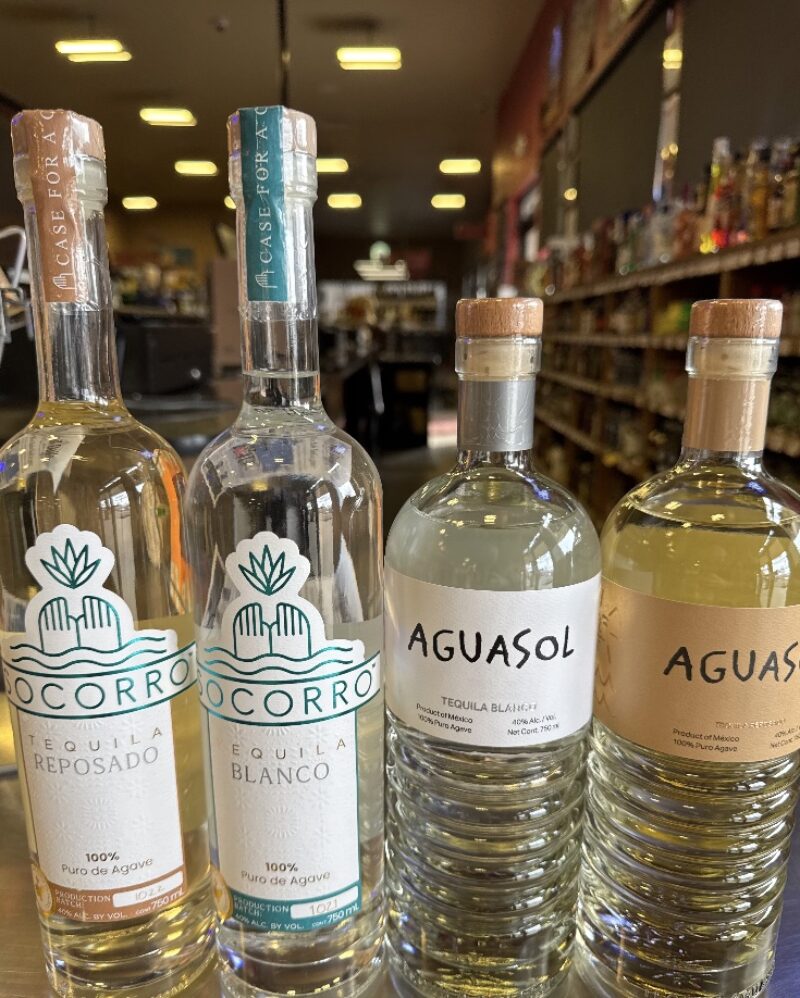
One quick label tip: look for “100% agave” on tequila. Bottles without it can be made with up to 49% other sugars, and you’ll usually taste the difference.
If you’re new to all of this, start with a solid blanco tequila and a beginner-friendly espadín mezcal and try them side by side. You’ll figure out pretty fast which one you keep reaching for.
Stop by Boone’s Wine & Spirits and check out our agave section. We’re always happy to point you toward something smooth, something smoky, or something in between.